Introduction to Novak Djokovic
When discussing the greatest players in tennis history, novak djokovic is a name that simply cannot be ignored. Over nearly two decades, he has built a career defined by mental strength, physical endurance, and an extraordinary hunger to win. From his early days in war-torn Serbia to becoming one of the most decorated athletes in modern sport, Djokovic’s journey is both inspiring and historic.
He is not just a multiple Grand Slam champion; he is a symbol of resilience. His ability to rise under pressure and silence hostile crowds has become one of his trademarks. In an era shared with legends, he did not just compete — he dominated.
Early Life and Background
Growing Up in Serbia
Novak Djokovic was born on 22 May 1987 in Belgrade, Serbia. His childhood was far from ordinary. He grew up during a period of political instability and conflict in the Balkans. Despite these challenges, tennis became his escape and focus.
He started playing at the age of four. His talent was noticed early by Serbian coach Jelena Genčić, who reportedly told his parents that he was the greatest talent she had seen since Monica Seles. That early belief helped shape his confidence and ambition.
Moving Abroad to Train
Recognising his potential, Djokovic moved to Germany as a teenager to train at a professional tennis academy. This step was crucial. It exposed him to international competition and professional standards. It also required maturity beyond his years.
Those formative experiences built the discipline and toughness that would later define novak djokovic’s career.
Professional Breakthrough
Rising Through the Rankings
Djokovic turned professional in 2003. By 2007, he had already broken into the top three in the world rankings. His first Grand Slam title came at the Australian Open in 2008, where he defeated some of the biggest names in the sport.
This victory was significant. It proved he was not just a talented young player but a genuine contender capable of challenging the dominant forces of the time.
Establishing Rivalries
Djokovic’s career is closely linked to his rivalries with Roger Federer and Rafael Nadal. Competing in what many call the greatest era in tennis history, he had to overcome two icons at their peak.
Rather than fading under pressure, he elevated his level. His matches against Nadal at the French Open and Federer at Wimbledon are now part of tennis folklore. These battles pushed him to develop an almost unmatched level of physical and mental resilience.
Playing Style and Strengths
Defensive Mastery
One of the defining features of novak djokovic’s game is his defensive ability. He slides across hard courts as if on clay and returns balls that most players would consider unreachable.
His flexibility, balance, and anticipation allow him to turn defence into attack within seconds. Watching him play is like seeing someone refuse to accept that a point is lost.
The Return of Serve
Djokovic is widely regarded as one of the greatest returners in tennis history. His ability to neutralise powerful serves gives him an advantage against even the biggest hitters.
In crucial moments — break points, tie-breaks, match points — he often raises his level rather than shrinking. That mental strength separates champions from great players.
Grand Slam Dominance
Record-Breaking Achievements
Over the course of his career, novak djokovic has won 24 Grand Slam singles titles, the highest number in men’s tennis history. He has triumphed multiple times at the Australian Open, French Open, Wimbledon, and US Open.
He is particularly dominant in Melbourne, where his record at the Australian Open is exceptional. His ability to peak physically at the start of the season has often given him an edge over rivals.
Career Milestones
Djokovic has also achieved a Career Grand Slam, meaning he has won all four major tournaments at least once. Additionally, he has spent a record number of weeks ranked world number one, further underlining his consistency.
These achievements are not accidental. They are the result of discipline, preparation, and an obsessive commitment to improvement.
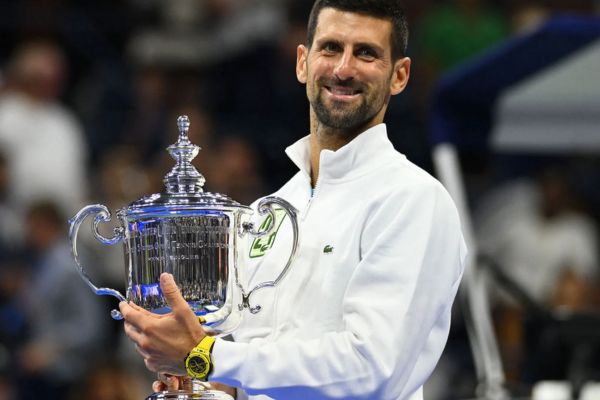
Novak Djokovic at the US Open
Success in New York
The US Open has played an important role in Djokovic’s career. He has won the tournament multiple times and reached numerous finals and semi-finals. The fast hard courts suit his aggressive baseline game and strong return.
Many of his most dramatic matches have taken place in New York, often in front of loud and divided crowds. Yet time and again, he has shown the ability to block out noise and focus on the task at hand.
Memorable Moments
From marathon five-set battles to emotional celebrations, his performances at the US Open highlight his fighting spirit. Even when trailing by two sets, he has demonstrated belief in his ability to turn matches around.
Coaching and Support Team
Influential Coaches
Throughout his career, Djokovic has worked with several respected coaches. Former Wimbledon champion Boris Becker guided him to multiple Grand Slam titles during their partnership.
Later, Croatian coach Goran Ivanišević became a key figure in his team. Under Ivanišević’s guidance, Djokovic added further major titles and continued to dominate well into his thirties.
Coaching changes in tennis are common, but Djokovic has consistently built strong, professional relationships that enhance his performance.
Personal Life
Family and Marriage
Novak Djokovic married Jelena Djokovic in 2014. The couple had been together since their teenage years, making their relationship one built on long-standing trust and understanding.
They have two children and often speak about the importance of family balance. Despite global fame, Djokovic frequently emphasises the role of his family in keeping him grounded.
Philanthropy and Foundations
Djokovic is also known for his charitable efforts. Through the Novak Djokovic Foundation, he supports early childhood education initiatives in Serbia and beyond. His commitment to giving back reflects his awareness of his own challenging upbringing.
Physical Conditioning and Diet
Focus on Health
One aspect that transformed Djokovic’s career was his focus on diet and fitness. Early in his career, he struggled with breathing issues and physical endurance.
After adjusting his diet and training methods, his stamina improved dramatically. He became one of the fittest athletes on tour. His flexibility and recovery ability now allow him to compete at the highest level even as he moves into his late thirties.
Mental Strength
Handling Pressure
If there is one quality that defines novak djokovic above all else, it is mental toughness. He has repeatedly won matches after saving match points. He thrives in hostile environments and often uses crowd energy as motivation rather than distraction.
This psychological edge has allowed him to win tight matches against the very best players in the world.
Legacy and Impact
Redefining Greatness
Djokovic’s legacy extends beyond statistics. He changed perceptions about what is possible in tennis longevity. Competing and winning deep into his thirties, he has inspired younger athletes to prioritise fitness and mental resilience.
He also played a central role in reshaping discussions about the greatest player of all time. His achievements forced fans and analysts to reconsider traditional narratives.
Influence on the Next Generation
Young players now study his movement, return technique, and mental preparation. His influence can already be seen in the playing styles of emerging stars.
Conclusion
Novak djokovic’s journey from a young boy practising in Serbia to a record-breaking global icon is a story of determination and belief. He has conquered every major tournament, held the world number one ranking for a record duration, and built a reputation as one of the fiercest competitors in sport.
More than trophies, his career represents persistence. In an era filled with legends, he carved out his own place at the very top.
As tennis continues to evolve, the name novak djokovic will remain central to its history — not only for what he won, but for how he won it.