Cartetach: The Smart Technology Concept Transforming Digital Identity and Secure Access

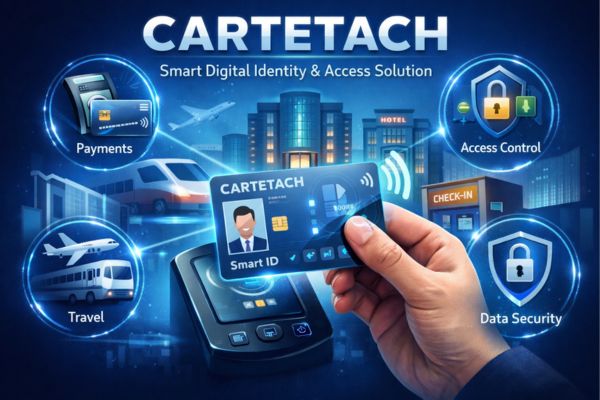
Technology continues to reshape the way people interact with services, devices, and information. From contactless payments to digital identity systems, modern innovations aim to make everyday activities faster, safer, and more convenient. One emerging concept attracting growing attention is Cartetach.
Cartetach represents a modern technological approach that integrates digital identity, smart card functionality, secure access systems, and data management into a unified platform. Rather than relying on multiple cards, passwords, or devices, this system is designed to simplify how individuals verify identity, make payments, and access secure environments.
As organisations and cities move towards digital transformation, the concept behind Cartetach reflects a broader shift towards smarter, more connected ecosystems.
Table of Contents
ToggleUnderstanding Cartetach
Cartetach can be described as a smart technology framework that combines several digital services into a single secure solution. The idea is to allow individuals to carry one intelligent digital identity that works across multiple environments such as workplaces, transport systems, financial services, and secure buildings.
Instead of managing many physical cards or login credentials, a user could rely on a single system that performs several roles simultaneously.
These roles may include:
Digital identity verification
Secure building access
Contactless payment functionality
Travel authentication
Personal data management
The main goal is convenience without compromising security.
In simple terms, Cartetach attempts to create a digital ecosystem where identification, access, and services operate seamlessly together.
The Technology Behind Cartetach
Although Cartetach is often described as a concept or platform rather than a single product, it relies on several existing technologies working together.
NFC and Contactless Technology
One of the core technologies used within Cartetach systems is Near Field Communication, commonly known as NFC. This technology allows devices or smart cards to communicate when placed close to a reader.
Contactless payment cards already use this technology, allowing people to complete transactions simply by tapping their card on a terminal.
Cartetach builds on this principle by extending the same convenience to identity verification and secure access systems.
Encrypted Data Protection
Security plays a critical role in any digital identity solution. Cartetach systems typically use encrypted communication to protect personal information during transactions.
Encryption ensures that sensitive data cannot easily be intercepted or copied during transmission.
Advanced systems may also generate dynamic authentication codes. This means every transaction or verification request produces a new secure code, reducing the risk of cloning or identity theft.
Cloud-Based Data Integration
Modern digital ecosystems rely heavily on cloud infrastructure. Cartetach platforms may use cloud-based databases to manage authentication records, identity credentials, and user permissions.
This allows systems to update quickly and operate across multiple locations.
For example, if a person’s access rights change within a company, the system can update instantly across all connected entry points.
Why Cartetach Is Becoming Popular
The growing interest in Cartetach reflects broader technological trends focused on convenience, security, and digital transformation.
Several factors contribute to its rising relevance.
Increasing Demand for Digital Identity Solutions
As more services move online, the need for reliable digital identity systems continues to grow. Governments, financial institutions, and corporations all require secure methods for verifying users.
Cartetach offers a framework where digital identity could function across multiple platforms without repeated registration processes.
Growth of Smart Cities
Many cities are investing in smart infrastructure designed to improve efficiency and connectivity. Transport networks, public buildings, healthcare systems, and educational institutions are gradually becoming more integrated.
In such environments, a unified identity and access system becomes extremely valuable.
Cartetach aligns with this vision by enabling individuals to interact with city services through one secure platform.
Demand for Simplified User Experience
Modern users expect technology to be simple and fast. Carrying several cards or remembering numerous passwords creates unnecessary complexity.
Cartetach aims to reduce this burden by combining services into a single secure identity tool.
Potential Applications of Cartetach
The versatility of Cartetach technology means it could be applied across many different industries and sectors.
Workplace Security and Access
Many organisations already rely on identification cards for employees. These cards control entry to offices, restricted departments, and equipment areas.
With Cartetach systems, a single credential could handle multiple functions including office entry authorisation, computer login verification, and internal payment systems such as staff cafeterias.
This creates a more efficient and secure workplace environment.
Transportation Systems
Public transport networks often use travel cards or mobile ticketing applications.
Cartetach could unify these services so that travellers use a single digital identity for buses, trains, underground systems, and even bike rentals.
Such integration improves convenience and helps transport operators manage passenger flow more effectively.
Healthcare Identification
Healthcare systems frequently require accurate patient identification to avoid medical errors.
A secure digital identity platform like Cartetach could allow hospitals to quickly verify patient records, prescriptions, and insurance details.
This would improve administrative efficiency while also strengthening data protection.
Educational Institutions
Universities and schools often provide student ID cards used for library access, building entry, meal payments, and examination authentication.
Cartetach could simplify these services by managing them within a single intelligent system.
Students would no longer need multiple credentials for different facilities.
Security Advantages of Cartetach
Security remains one of the most important aspects of any digital identity system.
Cartetach offers several advantages compared with traditional identification methods.
Reduced Risk of Physical Card Loss
Traditional systems rely on multiple physical cards. Losing one can create security risks and administrative inconvenience.
Cartetach platforms may use digital credentials stored securely on smart devices or encrypted cards, reducing the number of items users must carry.
Strong Authentication Systems
Advanced authentication methods such as biometric verification can be integrated into Cartetach frameworks.
Fingerprint scanning, facial recognition, or device authentication can ensure that only authorised individuals access sensitive systems.
Real-Time Access Control
Organisations using digital identity systems can immediately adjust user permissions when necessary.
For instance, if an employee leaves a company, access rights can be removed instantly across all connected systems.
This reduces security vulnerabilities associated with outdated access privileges.
Challenges and Considerations
Despite its potential, the implementation of systems like Cartetach also raises important challenges.
Data Privacy Concerns
Any platform managing digital identity must handle personal data responsibly. Strong privacy regulations and transparent data management policies are essential to protect users.
Organisations implementing Cartetach systems must ensure compliance with international data protection standards.
Infrastructure Requirements
Building an integrated digital identity ecosystem requires significant technological infrastructure.
Hardware readers, secure databases, authentication software, and network integration must all work together effectively.
This can require substantial investment, particularly during the early stages of deployment.
User Adoption
For a system like Cartetach to succeed, users must trust the technology and understand how to use it.
Clear communication, user education, and reliable performance are necessary to encourage widespread adoption.
The Future of Cartetach Technology
The concept behind Cartetach reflects the direction in which digital services are evolving. As technology continues to advance, integrated identity systems will likely become increasingly common.
Future developments may include greater integration with smartphones and wearable devices, more advanced biometric authentication methods, improved artificial intelligence for security monitoring, and expanded use within global travel systems.
As organisations seek efficient ways to manage digital identity, access control, and secure payments, platforms inspired by Cartetach may play a growing role in modern digital ecosystems.
Conclusion
Cartetach represents a forward-thinking technological concept designed to simplify how people interact with digital services, secure environments, and identification systems. By integrating identity verification, contactless payments, and access control into one unified platform, it offers a glimpse into the future of connected technology.
While challenges such as data privacy and infrastructure development must be addressed, the potential benefits are significant. Greater convenience, improved security, and seamless digital interaction are powerful advantages in an increasingly connected world.
As industries continue to embrace digital transformation, concepts like Cartetach may become key components of the smart, efficient systems that shape the future of everyday life.